Monday, April 30, 2012

MMWUC: Humor in the Morning

Passed on to me from Shagra from some where on the web. So true. So true. 

There are over 150 million blogs out there from which to chose. Thanks for coming by and listen to me blather on about writing, or reviewing some book, or a guest blogger, spouting off about an area of expertise or interest.

Time to get back to the writing in a serious way this week. Sales of my two novels are tailing off. Such is the life of even two 5-star rated novels that the public is always looking for the "new" book even when there are millions of good books out there begging for readers.

The Type A flu is waning, finally, the garden is planted, the weather will be reaching for the intolerable zone this week. Can you says 90s? Prime writing time for me. Look out adverbs, I have you in my sites.


Friday, April 27, 2012

Guest Blog: "Invisible Voice?" by Maria Forest


Invisible Writing by William Tapply chronicled his discovery that good writing is not about fancy vocabulary words, which only call attention to the author; but conveys information clearly and concisely (with or without adverbs). The punch-line of the article is: The author's father had written thousands of articles for an outdoor magazine and "People thought of [his] father as an expert outdoorsman … nobody seemed to consider him an expert writer.
When I read it in the 1994 Writer's Digest, I thought "Well, cool. Now I have a name for how I like to write." (I didn't know what style was back then, or the fact I even had one.) Up to that point I had taken great pains to make sure my characters had distinct voices, that the exposition (or narrator's voice) was the POV character's voice, and authorial intrusion was eradicated.
And then the plot twisted. The word went out: Agents and editors were looking for authors with a "strong voice". After years of searching, a friend finally gave me an explanation I could wrap my head around: "It's the author putting him/herself on the page so that it's like the author is reading aloud to the reader."
Well, that's not invisible writing.
Indeed it was not. I met a woman in a local writing organization who, after years of writing lots and doing everything an aspiring author needs to, finally got an agent and sold to a couple publishing houses. Yes, a couple pub houses: multi-book, multi-series contracts. She's a talented lady. But I can't read her books. I tried, but just couldn't. Don't get me wrong. The story premise was interesting, and the woman herself is very nice. But I didn't want her voice and quirks and mannerisms in my head while I'm reading. She had a strong voice, which kept me from escaping into the story.
As the epub phenomenon loosens the grip that agents and editors have on writers and authors, I'm once again free to indulge my invisible voice. But I do have to find my own audience....
- - -
Maria Forest lives happily in North Carolina with her husband and two kids (who sometimes pretend to have or be cats, dogs, or birds). She writes urban fantasy, sci-fi, and Christian fiction. Visit her blog.

Wednesday, April 25, 2012

Book Review: "Skeleton Key" by Jeff LaFerney


I'm not sure how I ended up with Skeleton Key by Jeff LaFerney on my Kindle, but there it was. So I read the faith-based, paranormal mystery story that is doing well in the "sports" sub-sub-sub-sub genre on Amazon. My protag runs. Perhaps, I too, can get into this category somehow. Bottom line: the weird paring of genres works. I'm not much for paranormal involvement in the solving of a crime, and it took a small dose of butt-glue to keep me interested in this aspect of the story, but LaFerney handles it well.

Aside from the paranormal "mind powers" possessed by the protagonist (Clay Thomas) and his son (Tanner), there is a strong dose of faith and positivism injected into a story by the love interest (Erika Payne) that brushes up against, but never crosses the line of feeling pushy. Unusual characters, both past and present, fill the story: a midget with incredible dexterity, a squirrel who gets what he deserves, a pain-in-the-ass ghost, and a deputy straight from the-gang-that-couldn't-shoot straight. The story was well-constructed, peeling back the layers of a seven-year-old mystery surrounding the disappearance and murder of Erika's ne'er do well husband, Adrian, to reach the climax. What was missing? Well, the tension in the story never reached a sharp edge despite many opportunities to bring this to the "OMG, I can't go to sleep now" level. Only one scene really caught me by total surprise - midget breaking window. I think this is where the paranormal aspect (mind control, ability to snatch images from the future, clarifications from the ghost) hurt the story, allowing us to be prepared for some eventualities. If everyday humans solved this mystery, this might have been a "5". I wonder if Tanner saw the solid "4" coming from me?

Monday, April 23, 2012

MMWUC: The Writing World Needs Changing


Ann Pachette's response to this year's lack of a winner of a Fiction Pulitzer Prize got me thinking about changes needed in the writing world that might make writing, writers, and writerly activities get as much press as the latest Kim Kardashian fingernail chip or Lindsay Lohan denial about running someone over. Some might be more doable than others, but we've got to keep the pressure on, especially for the indie (self-pub) writers emerging from the slush piles of the world.

1. Stephen King should lock "the committee" in a room sans bathroom and not allow them out without a selection in all categories. With 50-80K new books a year, it is a crime not to select one.

2. The writing power brokers (Amazon, B&N, Big 7 Publishing Houses) need to demand that an Oscar is given to the Best-Adapted Screenplay to the screenplay writer AND the original author, without whom there would have been nothing to adapt.

3. If the writing power brokers  want to save the writing/reading/publishing business, demand several categories on the People's Choice Awards. Hell, "Best TV Obsession"!? WTF? Surely we can have a category for best novel of the year, and, maybe best mystery of the year. This is an entertainment award.

4. Though I imagine a scene similar to the one from Finding Nemo with all the seagulls yelling, "Me, me, me, me, me, me," but we need to resurrect the Needle Award for the best of the best self-published books of each year.

5. Demand your representative re-institute the National Day of Writing. It was October 20th for 2009, 2010, and 2011. What happened to 2012? Well, we could WRITE our representatives or give the National Council on Teaching Education a firmer push. Hey! It's every year people. Don't drop this pencil

6. I need to resurrect my treatment for a writing reality show where 30 writers must go through grueling critique sessions from a panel of experts (PEOPLE THAT ARE KNOWN) based on continuingly longer pieces of fiction (flash fiction - under 100 words; flash fiction - under 500 words; short-short - under 1,000; short story - 1,001 to 3,000 words long) being eliminated over the 5-week period. Need a hot, ditzy blonde who writes incredible as a ringer, some criminal element. The prize: $1M advance for a novel.

7. Yo! Screenwriters. Write more movies starring hot muse babes who get into wet t-shirt fights deciding who gets to inspire Brad Pitt, George Clooney, or Hugh Jackman to write the next great movie staring another hot babe who rejects Justin Bieber ("Baby, baby, baby, ooh) for a bowling alley pin boy who writes lyrical poetry like Shakespeare.

8. We have a National Dirt Late Model Hall of Fame , but no Hall of Fame for Writers! There are some in several states, but not all, but you'd think we'd want to recognize certain writers eternally. Yeah, writers can do it up write, er, right, in the Lincoln-Kennedy Center and be on Public TV getting their overdue accolades.

9. Create a merit badge for the Boy/Girl Scouts. "Write a short story of no less than 1,000 words on why you need to help writers cross the street." Hook 'em young, my wife says, and they'll follow forever.

Okay tell me what else (#10) we need to do to give writers their do like we do other segments of our society.

Friday, April 20, 2012

Guest Blog: Beth Camp is "Up Against the Wall, Baby!"


No matter the reason, every once in a while, writers will hit the wall, the story will stall, and words will stop for even the most accomplished wordsmith.

When this happened to me last summer, I tried a combination of techniques: journaling, writing flash fiction inspired by the Internet Writers Workshop, reading research, and pushing myself back into my story. I tried brainstorming (my brain suffered), and outlining (I hate outlining). I do write chapter summaries as I work (and lists of major and minor characters), but I couldn’t see the whole story easily and I couldn’t decide what to write about next.

Nothing really worked until I went to the wall.

So if you are stuck, try this: Get a nice big wall-sized cork board, a bunch of stick pins, and a collection of 3x5 cards. If you’ve got a partial draft down, summarize each chapter in a few key words on a 3x5 card. Some writers might use different colors of cards; I tend to grab whatever color is handy.

Post the cards on the board in roughly the order of your story. Beginning, middle, and end. Since I write historical fiction, my story divides neatly into sections by time and location. I label section headings and put these across the top of board. Now, rearrange your 3x5 cards until the sequence of your plot makes sense.

Study the board. What’s missing? 

Prepare more cards. Consider major scenes, supporting characters, change in the seasons, historical events. Post maps and photos. Let’s not worry about any mess. Trust where you are in the writing process. If you have questions about your story, jot them on a 3x5 card and get them up on the board. Use anything that will help you understand your characters, conflicts, key scenes, and settings.

Now when I’m working on the plot, I’m finding it easier to see what happens next and themes affect the entire story. I can quickly spot plot holes, work out the rising action of the plot, and see where and how character arcs influence each other. I can also find minor characters and develop them more fully over the life of the story. As I work, I’m deepening my understanding of each character and can manipulate major plots shifts (macro) and individual scenes (micro) to match their emotional journey.

Staring at the wall can bring inspiration. May your writing go well!

Beth Camp lives happily in eastern Washington with her husband, Allen, no cats, no birds, no dogs, and no fish. She writes historical fiction. Visit her blog at http://bethandwriting.blogspot.com 

Wednesday, April 18, 2012

Book Review: "Take No More" by Seb Kirby


Take No More by Seb Kirby has the international intrigue, settings, and plot twists to make broad comparisons to a Dan Brown novel. But unfortunately that's where the likeness starts to fade. Set in London, England and Florence, Italy, James Blake returns home to find his wife Julia dead in their apartment. It is catchy opening, but his emotional trauma is bumped aside by some leap of logic that "they" (Why they?) killed her and only he can crack the case by going to Florence because of a mysterious message "Help me" left on his cell phone and a link to Michelangelo's Leda and the Swan. What follows is complex set of twists and turns that pits everyman, James Blake, at odds against a corrupt Italian family from Florence. His dedication to his wife is admirable, but why this fly on wall isn't bumped off thirty-times over befuddles me. Brits must get a crash course in being James Bond in finishing school.

For me, the bigger disappointment was with the craft itself. This is a slim book for such a meaty plot, it felt more dashed off than carefully crafted, and the frequency of errors grew as we approached the somewhat predictable and non-confrontational ending. The author "told" me many things, but he didn't allow me to experience them through the character. Considering the locales, the descriptions should be rich tapestries and not another, "it was beautiful, wonderful" description. Also, authorial intrusions occurred where the protagonist thinks about the past of places he's not been to - the Italian police station comes to mind - or people he doesn't know. Controlled head-hopping is an art form not done well here. Some typos I can forgive, and we should be past the American/English word choices complaining, but there were several confusing tense changes and way too many awkward sentences that a good editor would not have allowed to pass on to the unsuspecting reader.

The missed opportunity to extend the mystery of the painting until the climax. So much more could have been done here. Tamping down my heightened expectations, I can give this novel a take it or leave it "3".

Monday, April 16, 2012

MMWUC: The muse in the mud is worth getting the taxes done

Rick sits and ponders. The taxes are done for 2011, but it took a monumental Sunday of scrounging around for  pieces of paper. When did I get so disorganized? I used to have everything ready: files ordered, charitable contributions yellow-highlighted in the checkbook and on VISA bill statements, out with the stack of old bills, files readied for 2012. I've lost myself to the muse and creativity. The "what if" has become "it's done."

Making sure the first hummingbirds have their sugary water is more important. pulling poison ivy (my fingers still ache) is a priority. Encouraging orchids, hostas, glads, a jasmine bush, roses, mock oranges, tulips, daffodils, johnny jump ups, and over a hundred other variety of flowers to bloom has intoxicated my muse. She spends more time smelling the forsythia and baby's breath than inspiring me to finish my current WIP. I pushed her into a mud puddle. She threw a garden gnome at me. His pointy head hit my pointy head, but the writing started up again.

God, my muse is hot when she's mad. And the writing's going well into the night. No taxes to tax me.

So, what mind-numbing chore saps you from writing, and how do you get around it? Or, are you just more mature than I?

Friday, April 13, 2012

Guest Blog: "Your Brain on Technology" By ryandake


So there you are, writing your historical novel, and in your book it’s 1735, and your hero has to take a poo, and you stop: have they invented the toilet yet? So you leave the poor bastard grimacing while you get out Nell Du Vall’s Domestic Technology, and you read:

The toilet, or water closet at the English call it, had several false starts. [...] Sir John Harrington, a man ahead of his time, installed a toilet of his own design in his country house at Kelston [...] in 1586. Harrington, who bathed every day, was considered a bit eccentric and his invention did not become popular.

And before you know it, your allotted writing time has gone down the crapper, because Nell’s book is so fascinating. But you know a lot more about the technology of your chosen time.

If you’re writing only about your own current time, no sweat--you’re swimming in the technological sea your writing is about. But you step out of now at the peril of your work’s verisimilitude. If your brain is as erratic as mine, you probably don’t even know your own technological past as well as you think. Quick: when did Walkmans become ubiquitous? Hell if I know, and I had one for years. Did the iPod come before or after the iTunes store?*

Fortunately we have Nell’s book (1988), and Wikipedia (2001). Facts can be ferreted out. And speaking of Wikipedia...

Think about what a change it’s made. Before Wikipedia, you had to find your car keys or bus pass, go to the library, bug the librarian, find the correct reference work, and hunt through it until you found (or gave up on) your targeted fact... now you just have to “go” to Wikipedia. If you know what you’re talking about, you can even add facts to Wikipedia. We have infinitely more facts at our disposal than even those poor slobs half a generation ago. Are you, you monad, any different? And how has that technology changed society?

Technology shapes us just as much as we shape technology.

And Facebook! Oh, admit it, you’re a FB junkie. You now have access to intimate details about the lives of perfect (six degrees of separation) strangers, sometimes whether you want to or not. Has it changed you? What interactions has it brought to your life that were unthinkable before 2004?

And Nutrasweet! Viscose (the fabric formerly known as rayon)! The cotton gin! MRIs! GPS! Aibo! Man, the list goes on forever. Every one a death knell to Natural Man. But if you’re writing, you’d best know when they showed up, and what they did to that innocent creature and society.

Unless you’re worldbuilding sf. Then you have to make them up, and they have to be convincing.

*2001 and 2003, respectively. The Walkman, for the terminally curious, launched July 1979.

ryandake is currently plotting the downfall of the United States of America, and how Northern and Southern California will split the sheets, via her sf novel Tulare Lake, to be published sometime before we all get our brains uploaded to AwesomeMommy, the giant AI in the sky.

Wednesday, April 11, 2012

Book Review: "Gnome on the Range" by Jennifer Zane


I don't remember why I picked up "Gnome on the Range" by Jennifer Zane, but I did. It's a quick, simple read. If you have a three hour plane trip, it mixes enough humor, romance, and mystery to keep you from worrying about rabid airline stewards, upset pilots, or drunken passengers. The protagonist, Jane West, is a likable widow working in her mother-in-law's sex shop. Her two kids are kids, mixing things up as they should. However, the plot line gets a bit thin in places. About 53% through the e-book, the mystery is not that hard to figure out, and I was somewhat disappointed that she throws herself back into danger at the end of the story like a clueless, love struck, horny mom. From a mystery aspect, she figures out next-to-nothing, which is a bit disappointing. I had hoped at some point, she'd turn on her analytical brain and connect a few dots or become an amateur sleuth to pinpoint the villain, who has to connect all the dots for her.

The humor is the best part of the story for me, the juxtaposition of some situations, some of her wry observations, and, of course, GG. Her mother-in-law saves the day inadvertently on several occasions and keeps the romance moving forward until it shamelessly triggers the final climax. No real pun intended. This is a hard book to rate. As a mystery, it is a run-of-the-mill "3." Some of the things the villain does in the story don't even make good villainy sense but are more or less there to move the plot forward with one more risky situation for our heroine. However, the humor and romance raises it up a notch, even though I'm not entirely sure what the single, hunky firefighter sees in her other than "big tits." But, I have a soft spot for garden gnomes, enough to raise this to a low "4".

Monday, April 9, 2012

MMWUC: Don't Make Me Angry At Your Book

It's all my fault. After stuffing myself with so much chocolate that I could hardly move, I went to the Red Box for a movie. Watching a movie seemed like a good idea, but I chose badly. Fifteen minutes into the movie, my wife said, "Is this the type of movie that is like the stories you get annoyed with and start ranting about in your office?" Yep. 2012: Ice Age is unwatchable unless you're high on mild drugs. If it were a book, it'd be unreadable. It'd be a "1" on Amazon. I'd be writing a story critique that I'd have to put in my desk and not send. Now, I just want my $1.25 back.

"Dad. What can make clouds like that?" "Glaciers, fast moving glaciers." Are you kidding me? Yes, these self-propelled glaciers moved from Iceland (or Greenland) 1,000 miles to Maine in two hours supposedly ejected from their moorings by volcanic activity without slowing down. Never mind that the scientists calculated the speed at 200 mph. And the protagonists are trying to beat the angry glacier to New York City (389 miles) in a succession of cars in six hours. That timeline makes no sense. The dialogue is inane, The characterizations moronic. The special affects (details) laughable. And I had no idea there were palm trees in Maine that need trimming by 100 foot long ice crystals pooped from the glacier. (I know some Mainers read my blog...please confirm about the palm trees.)

Yes, this Monday morning wake-up call has little to do with the craft of writing...or maybe it does. And yes, the picture of author Peter Bernhardt, The Stasi File, is as arbitrary as the alpine village with 13,000 foot peaks in Newfoundland being swallowed up by the 200 foot tall glacier.

Friday, April 6, 2012

Guest Blog: "When Research Becomes Procrastination" by Rebeca Schiller


Hi, my name is Rebeca. I am a research addict. Rick's note: The first sign to recovery--knowing who and what you are.

There I said it. Now you all know my dirty secret. I am cursed with this nagging fear that whatever I write that deals with history, politics, the arts, science needs to be backed by excessive research that would shame a doctoral candidate. So what’s the big deal? That’s a sign of being thorough, you might comment.

Well, yeah, but sometimes spending too much time surfing the interwebs, sifting through archives, collecting and reading too many books, and conducting endless interviews spells out one thing … PROCRASTINATION.

I’m going out on a limb here, but I believe that writers are the masters of procrastination. We come up with writing prompts to motivate us; write our daily pages so that writing becomes an ingrained habit; blog to share our wisdom with other writers; and obsessively shower (or vacuum, or take our dogs out on mile walks), claiming that’s where we get our best ideas. But when it all comes down to that opus that you’re supposedly outlining, pantsing, revising, or starting from scratch (take your pick), the truth is that you’re not getting very far in becoming a published writer because you’re not writing.

I won’t venture into the whole magillah on the psychology of procrastination (I’d have to research that first), but I will share my research neurosis.

Years ago, before I attempted to write fiction, I read a novel that centered on the Spanish Civil War. The author had written something in Spanish, which was grammatically incorrect. As a fluent Castilian speaker that put me off immediately and then I discovered that his history was also off. This wasn’t artistic license it was plain wrong. I vowed that if I decided to tackle fiction and if it had any sort of historical context to it, I would make sure that what I wrote was accurate.

Julius was born almost six years ago during NANOWRIMO. I finished the first draft in those 30 days. I was proud that I pulled this feat off and that I had it in me to write daily. My arrogant ego said if I could write a novel in 30 days then I could turn a perfectly polished manuscript in 12 months and start querying agents. And now I can comfortably say this in hindsight: Ha!

My first draft was bare bones in the research department and I knew that I had to layer it more. After all, I was writing about a woman’s preoccupation with the Spanish Civil War, The Rosenbergs, Alvah Bessie, the Blacklist mixed in with contemporary politics.

Those 12 months that I had given myself to write, polish and find an agent became the year that my mania for research went out of control. I had no free surface space in my apartment. Stacks of books were next to the couch, the bed, piled high on all tables, every space on bookshelves was crowded with either books or files. My narrow home office was turned into a storage room filled with boxes of books, and even the two large dog wire crates became book receptacles.

Okay, but what about the writing? I wrote—well, I revised and after each revision I had another question that needed more research and suddenly it’s three years later and I’m nowhere near to typing “The End.”

Now almost six years after the fact, Ihave admitted that I have a problem, but there is one benefit to my excessive enthusiasm for research—I have all the necessary information to finish the story. Like my attempt at quitting sugar cold turkey it’s time to quit researching, use all that knowledge and finish the damn book, but first let me clear my writing space. 

Rebeca Schiller is the online editor of HAND/EYE Magazine. She does write daily whether it’s for the magazine, her blog or her daily pages, but what she really needs to do is finish writing Julius.

Wednesday, April 4, 2012

Book Review: "Bigfoot Hunters" by Rick Gualtieri


Don't take this book on a camping trip. Take it to the beach. You'll thank me later. In the beginning of Bigfoot Hunters by Rick Gualtieri, I was thinking 'another typical Tuesday night made-for-TV movie (book).' Which kids get whacked by doing something stupid? But the action and stakes kept rising until it is outright carnage and full-scale war between Bigfoot and man. I was in it for the full ride. Though I think Rick gave away too much with continual 'what he/she/it didn't know' lines, it was done well. Hopefully for his next book, he'll let the action rip and scare us even further with turn-of-events that haven't had their horror broadcasted moments earlier.

Still, he stayed away from cliché situations and cardboard characters for the most part, giving the main characters more balance then typical horror fare. And there were a lot of characters and a boatload of POVs (Point-of-Views). Though not a fan of stories with a cast of hundreds, I never felt lost flopping from one situation to the other when the action heated up and you needed to catch up with the latest victim and occasional survivor. Some of his twists caught me and the angry Bigfoots by surprise. And there's one girl I want on my side in any situation. I've camped in the Wolf Creek Pass area years ago, and if Bigfoot is around, this is certainly territory worthy of their homestead. Bigfoot Hunters is a solid "4." Wait, what was that horrible shrill call from the woods?

Monday, April 2, 2012

MMWUC: A Musing Tit Bit


Some day my muse is with me, sitting naked on my lap, feeding me sweet nectar from an IV tube tied to the well of free-flowing dreams dreamt and remembered. Other days, my muse takes a break and heads out to I-40, sticks out a well-sculptured leg that would make Angelina Jolie drool with envy. My muse heads to Spivey's Corners and inspires some awe-inspiring whistling. Then, she gets lost. Can't find her way home, distracted by all manner of people in need of direction, inspiration, and idleness-made-incredible. The last four days she's been recovering from a trip, slowly feeding me from the deep well. Today, pay dirt; "Next Spring," she says, "the final product will blow readers away." Keep tuned. I may be whistling for joy.
- - -
Aaron Anderson returned. After seven years, thirty-two days, and some odd hours, the dead man wandered through the back door of the house he had once owned into the kitchen, poured a cup of coffee, and sat down on a chair he milled years ago at the small, round wooden table he'd created with his own hands in the shed outback. Jenny, his daughter, didn't go into hysterics, faint, or approach him. Without looking away from his worn face covered with stubble, she picked up her cell phone and dialed 911. "Aaron Anderson is in my kitchen. Please come." She stayed on the line with the cops as instructed. His lean and long fingers embraced the steaming cup. Without a coat, she figured he must be cold, coming inside from the morning's nip. Aaron Anderson carried the stench of death. His shirt was many sizes too large. His pants hung low, barely on. He parted his lips as if to speak to give life to this apparition. Seconds like minutes; minutes like hours, she waited. Her jumble of emotions couldn't settle. She beat back any pretense that she was glad to see him, but here he was. His steady gaze dropped from her to the cup. After a sip, his eyes shifted in the direction of an approaching siren.

He looked her in the eye once more then slid a key across the table to her, "I'm sorry." He folded his arms on the table and lay his head in them. Aaron Anderson died once more.
- - -
So what's your muse up to lately?

Friday, March 30, 2012

Guest Blog: "Catharsis Anyone" by Dr. Natalie Frank


As a psychologist, I was asked to write a guest post on anything writing related. I froze. Nothing came to mind that that would encompass psychology and writing.  Then I thought of my own writing. Why do I write psychological thrillers all of which seem to include some kind of revenge theme? And why do the revenge scenes always seem to practically write themselves, leaving me feeling energized instead of worn out?  The answer could be summed up in one word:  Catharsis.

I realized whenever an idea for a revenge based plot lines took hold of me, I was always in the midst of some kind of negative uncontrollable situation.  When you feel like a part of life has become a nightmare from which you can’t awaken what do you do?  I’ve found over the years of working with people in various life circumstances that there are generally two possibilities.  The first is to give up, falling apart to the point you are unable to function in that sphere of life.  The second is to figure out some way to cope.

Writers have a unique ability to use their work as means of coping with whatever comes their way through cathartic experiences.  You’ll frequently hear authors of memoirs state they experienced a feeling of closure after finishing the work.  That said, while much has been written regarding the use of journaling to “get your feelings out,” there is another side, a slightly darker side to catharsis achieved through writing:  Coping with the desire for revenge through creating a fictional version of a situation.

Standard techniques recommended for achieving catharsis, such as imagining your pillow as the face of the person you’re angry with and punching it until you feel better never held much appeal for me.  My personal belief is that catharsis results from doing something that can be related to the actual situation.  Let’s face it, how many of us need to get over being repeatedly punched in the face?

The desire for revenge most often results from having experienced some type of harm which you had no ability to control and for which there is no recourse.  For this, we don’t want to land a right hook – we want an eye for an eye.  While some may say to be the better person and just let it go, that also rarely makes us feel better.  I say get revenge.  Just do it on paper letting your imagination be your guide.

The beauty of writing, especially fiction writing, is that you can create any scenario you choose and determine the course of the plot, the experiences of the characters and how the entire thing will end.  Through the freedom of words we have within our grasp the perfect means to create the exact cure for our unrequited desire for revenge, which we can match to whatever specifics we need in order to move past it.  This is true catharsis.

Short Bio:  Dr. Natalie Frank received her Ph.D. in Clinical Psychology from the University of Georgia.  She is widely published in the field of psychology, is sharpening her first novel, and several literary journals have featured her short stories and flash fiction. Her blog is Divine Madness.

Wednesday, March 28, 2012

Book Review: "Rage" by Kimberly A. Bettes


In Kimberly A. Bettes novel Rage, 13-year-old Brian Boozer's life is horrific. His alcoholic step-dad is a child-beater and molester who sucks down the money Brian's double-shift working mother brings home so efficiently that Brian has little in his life to live on. His situation at school is no better, dealing with small pack of sadistic bullies. Save for one girl who gives him the time of day for reasons not entirely clear, Brian is alone to face the world bereft of any adult or child willing to look past the physical and emotional abuse and scars to give him a hand up. Therein lies the positive and negative aspects of this story.


In an effort to show the terrible nature of bullying, along with the ultimate final betrayal, Rage is relentless in its anti-bullying message by any member of society on another. It is a great instructional tool on how one exists and then drowns in a world in which no child should live. Kudos. The effort to show the negativity of bullying, however, provides no inkling as to the means in which readers could/should curtail such situations in their life. One could argue that Bettes doesn't have the responsibility to provide or hint at answers to the bullying dilemma in telling Brian's story, but the abrupt ending made the story feel incomplete, as though no answers exist, and that the people in this story learned nothing, making it a double tragedy. No one grew; no one changed. He is a victim in the beginning, middle, and end. All are villains in the beginning, middle, and end.

The story is well-written. The spiraling downward trail of events believable. It certainly built my rage, including at times towards Brian, who seems well aware of the events unfolding around him, but still backs off taking the baby steps necessary to curtail his personal hell. It's a solid read about a difficult subject matter that some readers may not finish, but should. It is a well done "4."

Monday, March 26, 2012

MMWUC: What Do I Know About Paragraphs?


A friend lamented about the comments he received regarding the correct length of a paragraph. His were often the length of a scene. He queried: How do you know when to start a new one? When is a paragraph long enough? I tried to help, keeping the guidelines simple, disregarding attempts James Joycian or Faulknerish, or trying to tweak paragraphs to match new means of information dissemination (i.e., ebooks, phones, or mental probes). A new paragraph begins...

1. ...each time there's a new speaker in dialogue.

2. ...each new POV (Point of View).

3. ...each new thought (though many will string related thoughts together).

4. ...when there is a significant shift in action in the narrative.

5. ...at the end of a significant string of related actions.

No firm rule dictates paragraph length. They can be a single word. Extending one beyond half a page would be a good benchmark to consider if you're going overboard with the paragraph. What are your best tips for my friend?

- - - EXAMPLE - - -

ALL'S RIGHT IN THE WORLD
------------------------

"Wait," barked Lassie.

"What's up, Lassie? What is it, boy?" Timmy asked.

Stupid human, Lassie thought. I'm a girl.

Stupid mutt. Timmy exhaled. Barks at anything.

"There's a rattlesnake behind that tree, you Moron," Lassie barked.

"Want to play fetch. Here, chase this stick. Stick!" Timmy threw the stick.

Lassie dashed after the irresistible piece of oak that a dozen squirrels, two possums, and one raccoon had used to mark their territories. She sniffed the delightful stick then picked it up. She turned around just in time to see Timmy lie down on the snake. The fangs sank into Timmy's arm through the flannel shirt.

Timmy screamed. Lassie barked. The stick fell to the forest floor. The snake slithered away. Lassie ran back to Timmy, bit him on the arm, and sucked out the poison as best she could.

A squirrel in a tree overhead chattered, "Dog!" All the squirrels in the area froze in place.

Timmy died from the snake bite. Dogs can't really suck anything. Lassie was put down, deemed a vicious dog. The squirrel became owl food. The snake ate the baby owlets. A smiling God watched on high from his orthopedic mattress set at 43 for firm comfort.

- - - END - - -
That's all I know about paragraphs. Go forth and write with confidence.

Friday, March 23, 2012

Guest Blog: Carter Jefferson - The Value of Historical Novels


I've spent most of my reading life with historical novels--all periods, everywhere. My earliest memories of childhood reading include novels about boys who travelled with Caesar and Vercingetorix.  I can't possibly name more than a  few of the best authors--Mary Renault on ancient Greece, Edith Pargeter on Wales, Morgan Llewellen on Ireland, Douglas C. Jones on the U.S. Civil War, Susan Vreeland on the Italian painter Artemesia. There are hundreds of them.

Then there is the mystery set in earlier times. Recently I've been reading Charles Todd's Bess series, dealing with a nurse in WWI, and Charles Finch's books on England around 1865. Both are outstanding.

I'm sure that historical novels shaped my life. I read them from childhood on, and ended up getting a Ph.D. in history from the U. of Chicago. Not only are such novels fascinating in themselves, they are a painless way of learning about the lives of people in other places in other eras. Want to know about Aaron Burr or Abraham Lincoln? Read Gore Vidal's novels about them.

Biographies are one thing—novels are something different. Needless to say, some of the novels are more accurate than others, but the best of them are based on solid research.

Right now I'm in the middle of Katherine Webb's The Legacy, which jumps back and forth between now and 1900. Gotta go now and see how it comes out!
- - -
Carter Jefferson can be found hanging out here.

Wednesday, March 21, 2012

Book Review: The Yard Sale by Cal Kirby


And now for something completely different--The Yard Sale (But It Ain't No Bargain). This slender novel is closer to a novella, but I don't believe author Cal Kirby cares. His command of mechanics is fine, but this 2001 first published book (now a 2011 ebook) is far from writing perfection. In fact, it's full of dropped-in factoids, blocks of character description, give-a-way chapter titles, odd asides, and violates many rules or guidelines in the search for conventional writing perfection. But, there is something endearing about this story and Chas Kirkland, a homicide detective, who tries to find a missing friend, Lisa Shoeman, before dastardly deeds can be done to her.

Gather around the kitchen table, Cal is just telling a story. And if he needs to say that Lisa didn't know what was coming her way, even though the reader does, well, that's just the way Cal tells the story. A Cheshire Cat grin stayed on my face while reading Yard Sale despite the serious nature of the story. Why? I turned page after page despite a strong desire to pull out the big red pen and mark the hundreds of ways it could have been made better through some serious editing. The simple story has some really terrible bad guys, a good cop with strong and dependable cop allies, a few twists, a couple of plucky characters, heck of a chase scene, and friends who rally when the chips are down. A good screenplay writer could do a lot with this.

Despite enjoying it for what it was, I doubt that many readers will: it's just not a quality read. Unlike some people who put out crap just to get your $0.99, I believe Cal published an honest, if flawed book. But if you can put down your big red pen, toss a buck this way, and just let your critical nature go, you just might have a nice afternoon beach read. Giving it a 2 for its flaws seems just mean for the pleasure I got out of the story, so I'll raise it up like Atlas to a "3."

Monday, March 19, 2012

MMWUC: Another Can of Beans

A friend asked me to help him out. His publisher had been pressuring him to create a web presence via a web site. He wondered if it was worth it. Well, I'm no marketing expert, but I agreed with his publisher. The higher the name recognition, the better the sales. The more times you show up on a web search, the more likely you won't be like an old can of beans stuck on a shelf waiting for some granny to get you on discount. You'll be the "AMAZING NEW ALL-TEMPERATURE WRITER on display in front of the store.


That written, there is a time drain involved with doing anything other than writing. Blogs and web sites can turn into the nightmare from Cleveland, the thing that wouldn't leave, or that blood-sucking monster under the bed. Don't get pulled into a big trap. Learn to budget your time. And if you're uncomfortable about your ability to build a website or blog, get some help. Sydney has some thoughts to help.

1. Look at the websites of authors you like. Steal the idea; make it better.
2. Keep the web page simple so that you don't have to update it every five minutes; though, you will be on it a lot in the beginning as you load up pertinent information.
3. Whoever designs your website, make sure they keep it simple to update. You don't want some expert geek giving you something that only he can update.
4. Create a blog that's linked to the website. Again, keep it simple. I hate going to a blog and spending a half-hour just trying to figure out what's going on.
5. Use the website for more static information; use the blog for more dynamic-interactive information, though there are times when the web site is better suited for contests and some other events.
6. Link, link, link, link. Should I say it once more. Link. Link the website and blog to everything you can. (via Twitter, Facebook, Linked-in, etc.)
7. Create a signature line to make sure people remember who you are and how to get more information about you.
8. Pick a theme for both your website and blog. They don't have to be the same. What are you trying to say that separates you from the crap that's out there clogging up the web?
9. Create consistency with your blog so that you aren't updating it daily or, god forbid, hourly. Leave the updates that your cat just barfed on your WIP for twitter. Write your weekly or bi-weekly blog entry about the positive affects of cat barf on the re-editing of a previously perfect WIP, as an example.
10. Don't let either the website or blog consume you. Without that next book, your career will wither and die. You must write.

Go forth and pollute the web. Does anyone else have additional advise?

Friday, March 16, 2012

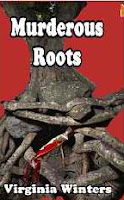
Guest Blog: Virginia Winters "Revising and Editing"


I'm sitting at the kitchen table in front of the bow window. Beyond the glass, the bird feeder is busy this Sunday morning, with chickadees, purple finches, American goldfinches, doves, nuthatches and cardinals the most frequent diners. In front of me sits a mound of paper, my trusty MacBook Pro and James Scott Bell's book entitled Revision and Editing.

It's that time. The third in my Dangerous Journeys series lies before me in pieces, some in the bowels of the computer and some in that mound.

I read through the lot after I'd put it aside for a month or so. I tried to come to it with fresh eyes, and didn't edit or revise.

Now I'm on the hunt for the adverbs, the dreaded "ing", the clauses beginning with "as". My weapons are markers, orange and pink.

What to do about "had"? I've come to terms with removing or rewriting phrases such as "congealing on her yellow linen skirt" or "as she watched the birds" or any word ending in "ly".

But what to do about "had"? My English teacher and my Latin teacher were both tough. An event in the remote past called for the pluperfect (past perfect) and nothing less.

The complaint by current writers seems to be that the use of this tense slows down the action. I like the clarity of knowing just when events occurred and in what order. I want to understand the cause and effect, and I need the past perfect for that.

So what happened in the past, stays in the past, held in place by that useful little "had".
- - -

Virginia Winters - The Facepainter Murders, available at Amazon.com and http://www.writewordsinc.com vwinters@sympatico.ca http://www.virginiawinters.ca http://ginny200.wordpress.com/